Get custom MJF nylon printed parts and prototypes from as fast as 3 days.
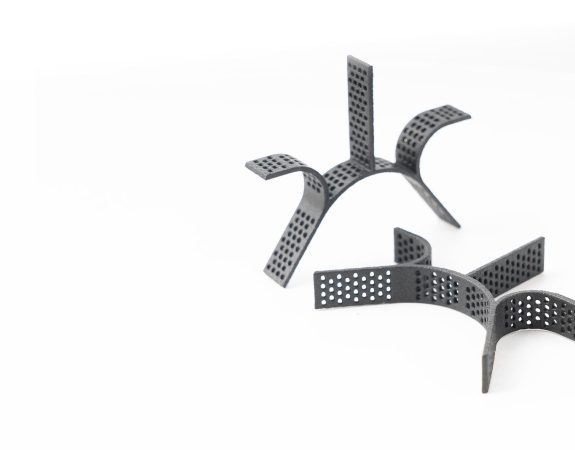
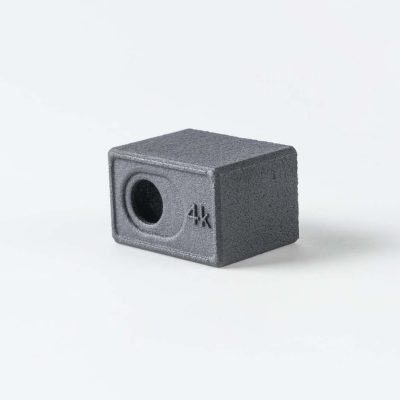
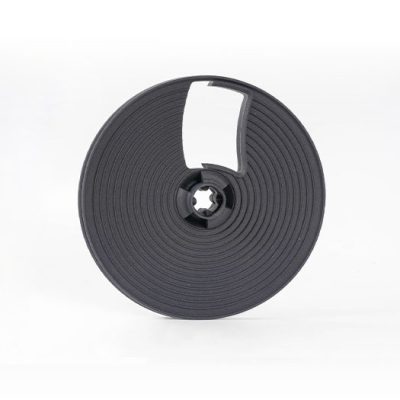
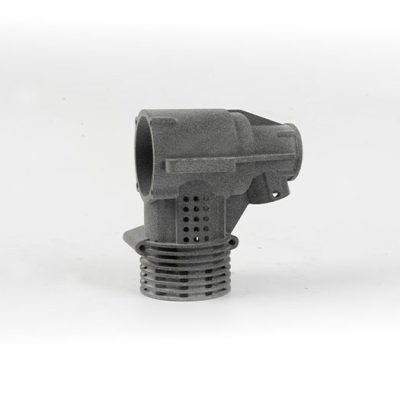
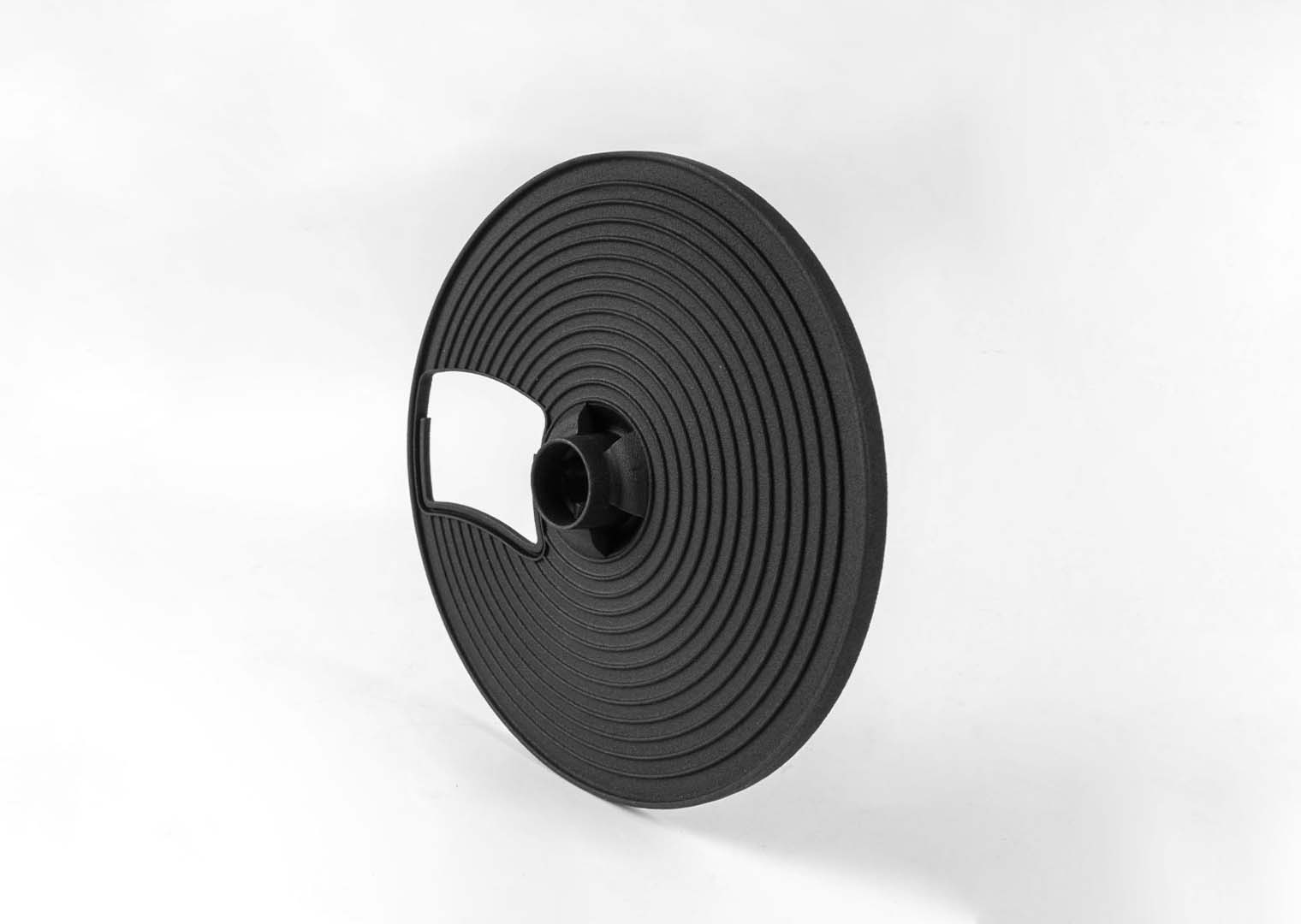
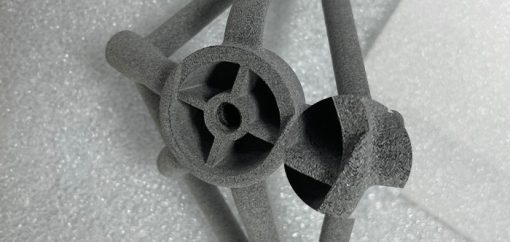
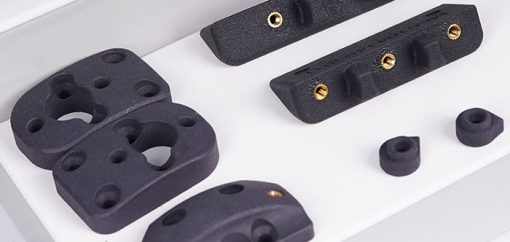
HLH Rapid offers Multi Jet Fusion (MJF) 3D printing services using HP’s industrial powder-based technology. MJF produces strong, functional nylon prototypes and end-use production parts. Compared with processes such as Selective Laser Sintering (SLS), MJF can deliver more consistent mechanical properties. It is considered one of the most efficient industrial 3D printing technologies and is well suited to highly demanding applications.
MJF works by spreading nylon powder across a build platform layer by layer. At each layer, an inkjet array selectively deposits fusing and detailing agents while an infrared energy source passes over the surface, fusing the powder to form a solid, functional part. Simply upload your STL files to get a quote and get your parts manufactured.
| Maximum Build Size | 380 × 280 × 380 mm (15.0″ × 11.0″ × 15.0″) |
| Material | PA12 (Nylon 12) |
| Layer Thickness | 0.08 mm (80 μm) |
| Tolerance | ±0.3% or ±0.3 mm, whichever is greater |
| Quantity | 1 – 10,000+ parts |
| Lead Time | From 3 days |






Get a quote / Get in touch
Please use the following formats:
.stl, .obj, .wrl, .step (.stp), .iges (.igs), .3mf, .dxf and .zip
100mb max file size (per file)
If you have a file type not listed, please contact us to discuss first.
UK Office: Suite 11 & 12A, 44 Potternewton
Mount, Leeds, LS7 2DR, United Kingdom
Company Number: 12704810
VAT Number: GB393458263
Factory: Building A, Hongfa Industrial District
Houda Road, Daling Shan, Dongguan,
Guangdong, China
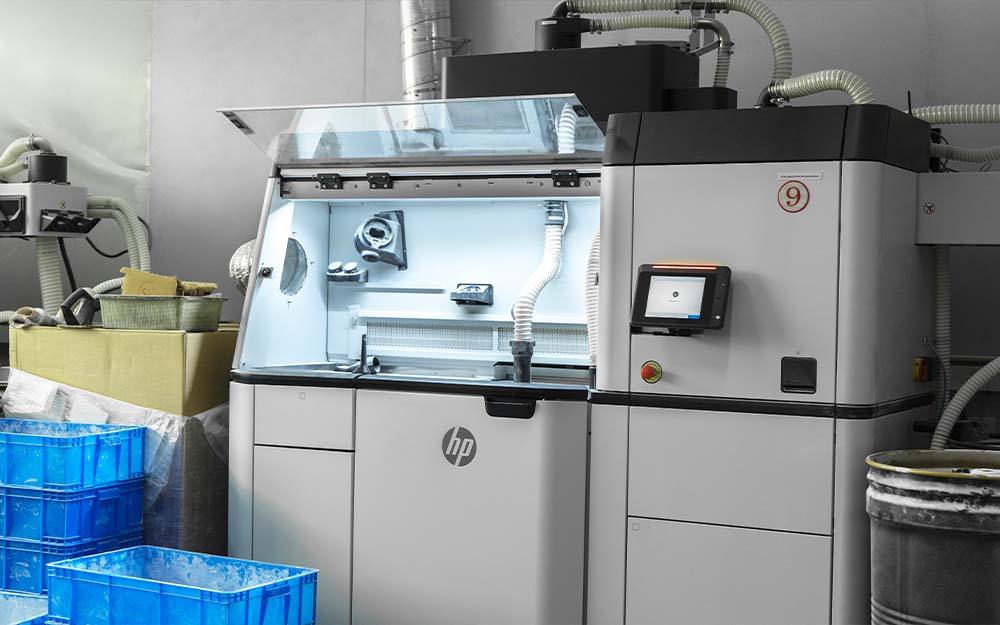
At HLH Rapid, we use the latest HP Jet Fusion 5200 Series machines and HP Jet Fusion Processing Stations that are capable of accelerated build speeds compared to other powder-based additive manufacturing technologies for efficient low- to mid-volume production or production-grade PA12 Nylon parts.
MJF and SLS are distinct 3D printing technologies that use powder nylon as their main material. While SLS uses a laser to fuse powder into solid parts, MJF uses an inkjet array to deposit agents and an infrared energy source to fuse the powder. View the comparison table below.
| Materials | Dimensional accuracy | Features | Build volume | Layer thickness | Min. feature size | |
|---|---|---|---|---|---|---|
| MJF | PA12 | ±0.3% or 0.3 mm (±0.012″), whichever is greater | Higher density, lower porosity, better isotropy | 380 × 280 × 380 mm (15.0″ × 11.0″ × 15.0″) | 80 μm | 0.5 mm (0.0196”) |
| SLS | PA12, PA+GF, TPU, PP | ±0.3% or 0.3 mm (±0.012″), whichever is greater | Packs more parts per build, wider range of materials and surface finishes | 400 × 400 × 450 mm (15.7″ × 15.7″ × 17.7″) | 100 μm | 0.5 mm (0.0196”) |
To achieve high dimensional accuracy, reduce warping and successful prints, it is important that you design for the process. See the MJF design guidelines below.
| Feature | Recommended Size |
|---|---|
| Minimum Wall Thickness | 1.0 mm (0.040 in) |
| Minimum Embossed and Engraved Details | Depth of 1.0 mm; Width of 1.0 mm (0.040 in) |
| Minimum Assembly Clearance | 0.9 mm (0.035 in) |
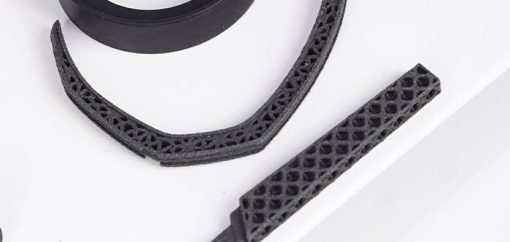
| Minimum Lattice Structure Clearance | 1.0 mm (0.040 in) |
| Threads Design (thread pitch) | 0.6 mm (0.024 in) |
| Minimum Escape Hole Diameter | 2.5 mm (0.098 in) |
| Minimum Hole Diameter | 1.5 mm (0.059 in) |
| Minimum Pin Diameter | 2 mm (0.079 in) |
Scalability
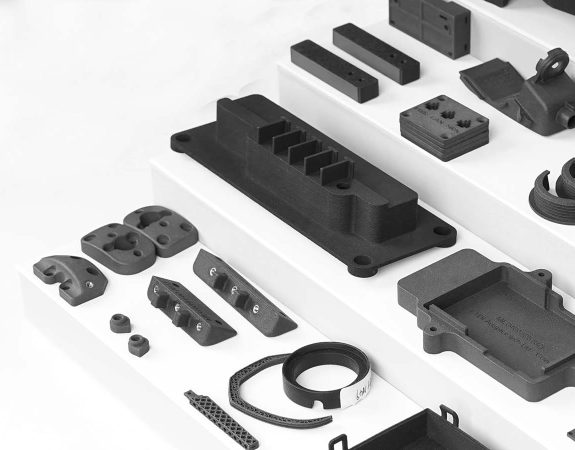
MJF can make a single part or component as easily as dozens or hundreds of production parts.
Complex Geometries
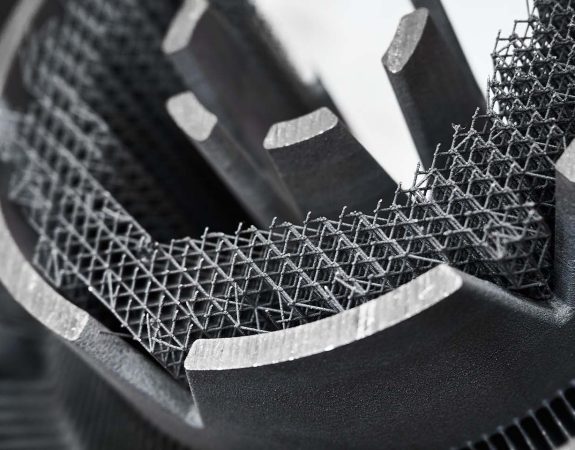
Geometries can be built more easily due to the 3D printing process, adding complexity without additional cost.
Functional Nylon Parts
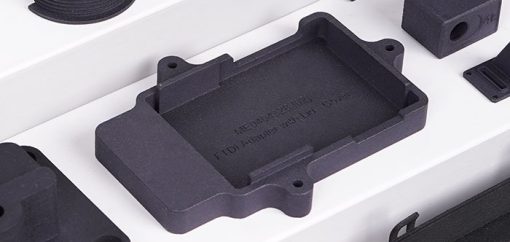
MJF is ideal for functional prototypes, snap fits, assemblies, and low-volume production components.
Rapid Turnaround
Parts can typically be shipped in 3 days, allowing for faster design iterations and speed to market.
Production Parts
MJF 3D Printing is capable of producing end-use parts with near-isotropic properties on-demand, increasing throughput
Limited Material Selection
MJF material options are more limited compared to 3D printing technologies like SLS and SLA.
Grainy Texture
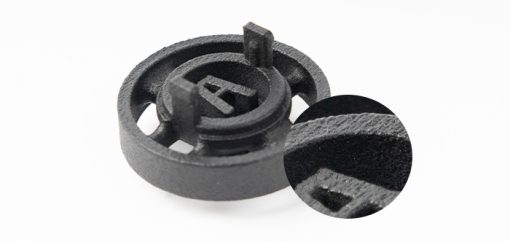
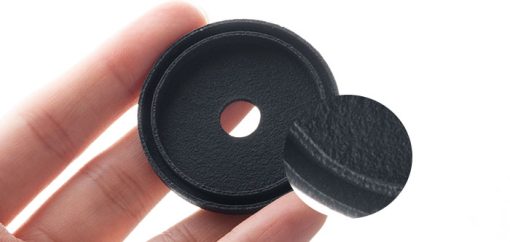
Parts typically have a rough, grainy surface finish and some internal porosity, often requiring post-processing to achieve the desired finish.
Scale Effect
The unit cost and lead time will not be reduced as much as vacuum casted or injection moulded parts.
While MJF PA12 offers good resistance to water, oils, greases, aliphatic hydrocarbons, and many alkalis, the powder-based nature of the process makes achieving watertight seals challenging.
The right combination of wall thickness, density, geometry, and post-processing is required. As a rule of thumb, a wall thickness of 1 mm is generally recommended for water resistance, and 4 mm or more for a watertight seal.
MJF is often the faster option for high-volume production runs. SLS machines generally have larger build volumes, which can make them a better choice if you want to fit as many parts as possible into a single build. However, MJF processes each layer in a single pass using an inkjet array, and its more automated depowdering process reduces the amount of manual handling required. As a result, MJF can often offer shorter overall lead times.
While both processes commonly use Nylon PA12, MJF typically yields stronger, more uniform (isotropic) parts across all axes. SLS produces durable parts, but mechanical properties can vary depending on part orientation in the build.