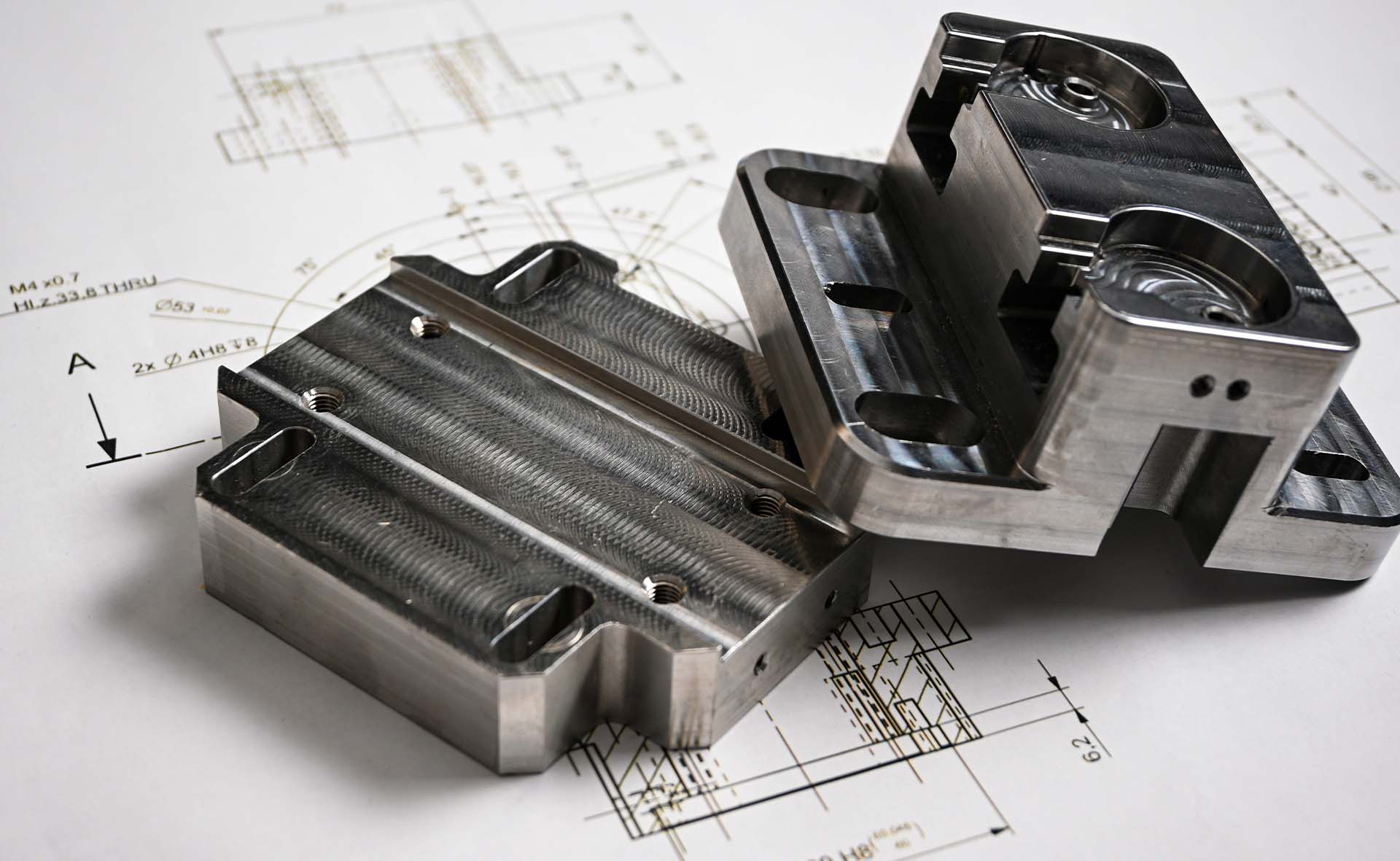
Can injection moulding be used for metal? Yes. This process is known as metal injection moulding (MIM) – sometimes called Powdered Injection Molding (PIM). Like plastic injection moulding, MIM is a cost-effective and efficient process that can be used for a wide range of applications.
What is metal injection moulding, and how does it work? Learn the basic principles and fundamental mechanics, as well as the key benefits and limitations of this manufacturing process in this article.
What is Metal Injection Moulding?
Metal injection moulding, or MIM, was first developed in the 1970s by Raymond Wiech in the US, but it has only been used commercially in the last twenty years. It combines the geometrical complexity possible from injection moulded plastic with the mechanical properties of high-performance metallic alloys. Components can be produced in a wide range of metals – steels, aluminum and titanium – and can be subjected to secondary treatments.
Despite there being a great contrast between the MIM and die casting processes, these two technologies are often compared as they are two of the most economical manufacturing processes for producing large bulks of complex-shaped metal components (over 100,000 parts).
How Does Metal Injection Moulding Work?
MIM involves four main steps: feedstock preparation, injection moulding, debinding and sintering. A simple concept, a complex process.
Step 1: Feedstock Preparation – This stages involves blending very fine metal powders with polymer binders to achieve the desired material properties. The mix is then heated into a viscous mass. The mass gradually cools down and is processed into granular pellets to form the “feedstock.
Step 2: Injection Moulding – Next, the feedstock is heated and injected into a mould cavity under high pressure, allowing for extremely complex shapes. Once the MIM component is removed, it is referred to as a “green” part.
Step 3: De-binding – In this stage, the “green” part is put through a controlled process called “debinding” that involves removing the binder, preparing the part for the final step. Once, debinding is complete, the component is referred to as “brown.”
Step 4: Sintering – After debinding, the brown part enters a continuous sintering process, where the parts are thermally processed in a controlled atmosphere to form a high-density metal component. During this sintering process, an approximate 16 to 18 percent shrinkage occurs, which results in products with densities approaching 98 percent of the theoretical density for a given alloy.
Pro Tip: It is vital to account for this shrinkage and ensure operating conditions and carefully controlled in order to achieve needed dimensional and performance requirements.
After the final MIM component is made, the characteristics and properties of the part can be further amplified or optimized by a wide range of secondary operations, including heat treatment, physicochemical surface treatment, chemical surface treatment, mechanical surface treatment, nonmetallic coatings, metallic coatings, organic coatings, and wear resistant coatings.
Materials Use in MIM
The metal injection moulding process is compatible with a wide selection of metals. Below is a list of metals available at HLH Rapid and their characteristics.
Steel
Good durability
Can withstand a great deal of wear and tear
Good corrosion resistance
Titanium
Excellent durability
Good strength-to-weight ratio
Good corrosion resistance
Advantages Of MIM
Low Unit Price: Like plastic injection moulding, metal injection moulding offers a significantly lower unit price. This makes it a cost-effective solution for producing higher volumes of metal parts.
Little to No Post-Processing Required: Due to the nature of the process, MIM can eliminate several product finishing (post-processing) steps, decreasing the time to manufacture ready-made components.
Accuracy and Precision: MIM offers excellent accuracy and precision. It is often used to produce intricate shape parts with very tight and precise tolerances, which makes it ideal for high-end applications, such as in the aerospace, aviation and automotive industries.
Design Changes Are Expensive: Design modifications will require mould modifications or even creating a new mould from scratch, which can significantly increase costs.
Longer Initial Lead Time: It can take between 4-8 weeks to manufacture tooling before you can begin manufacturing the parts.
Metal Injection Moulding With HLH
Considering the metal injection moulding process for your project? Contact our team of experts at info@hlhrapid.com for advice or upload your CAD file here for a DFM and quotation. Use HLH’s MIM services to get custom industrial grade components in as fast as 3 weeks.
We use cookies on our website to give you the most relevant experience by remembering your preferences and repeat visits and to provide personalised ads. By clicking “Accept All”, you consent to the use of ALL the cookies. However, you may visit "Cookie Settings" to provide a controlled consent.
This website uses cookies to improve your experience while you navigate through the website. Out of these, the cookies that are categorised as necessary are stored on your browser as they are essential for the working of basic functionalities of the website. We also use third-party cookies that help us analyse and understand how you use this website. These cookies will be stored in your browser only with your consent. You also have the option to opt-out of these cookies. But opting out of some of these cookies may affect your browsing experience.
Necessary cookies are absolutely essential for the website to function properly. These cookies ensure basic functionalities and security features of the website, anonymously.
Cookie
Duration
Description
cookielawinfo-checkbox-analytics
11 months
This cookie is set by GDPR Cookie Consent plugin. The cookie is used to store the user consent for the cookies in the category "Analytics".
cookielawinfo-checkbox-functional
11 months
The cookie is set by GDPR cookie consent to record the user consent for the cookies in the category "Functional".
cookielawinfo-checkbox-necessary
11 months
This cookie is set by GDPR Cookie Consent plugin. The cookies is used to store the user consent for the cookies in the category "Necessary".
cookielawinfo-checkbox-others
11 months
This cookie is set by GDPR Cookie Consent plugin. The cookie is used to store the user consent for the cookies in the category "Other.
cookielawinfo-checkbox-performance
11 months
This cookie is set by GDPR Cookie Consent plugin. The cookie is used to store the user consent for the cookies in the category "Performance".
viewed_cookie_policy
11 months
The cookie is set by the GDPR Cookie Consent plugin and is used to store whether or not user has consented to the use of cookies. It does not store any personal data.
Functional cookies help to perform certain functionalities like sharing the content of the website on social media platforms, collect feedbacks, and other third-party features.
Performance cookies are used to understand and analyse the key performance indexes of the website which helps in delivering a better user experience for the visitors.
Analytical cookies are used to understand how visitors interact with the website. These cookies help provide information on metrics the number of visitors, bounce rate, traffic source, etc.
Advertisement cookies are used to provide visitors with relevant ads and marketing campaigns. These cookies track visitors across websites and collect information to provide customised ads.